
Visibility
On Pride, skylarks, and waiting for signs that it is safe to land.

For one brief, glorious stretch of summer, rainbows appear everywhere. In shop windows and email signatures. Teenagers with glitter on their cheeks walk through train stations holding hands without looking over their shoulders quite so much. Queer people become, however temporarily, visible.
I know Pride has become commercialised. I know there are fair criticisms to be made about rainbow capitalism and corporations changing their logos for thirty days while doing very little the other eleven months of the year. But even so, I still find myself softening every June at the sudden appearance of colour and openness and recognition.
Because beneath the bunting and branded tote bags, Pride remains rooted in something much older and more defiant than celebration alone.
It is a protest. A refusal to disappear. A collective decision by generations of queer people to become visible in a world that often preferred us obscured, edited, coded or silent.
This visibility matters more than than people think. Particularly in rural spaces. Particularly in workplaces. Particularly in sectors like conservation, where many organisations are still learning how to move from abstract values about inclusion into something more lived and embodied.
I’m relatively new to my organisation, and last year we didn’t do anything for Pride.
To be fair, neither did I.
June arrived wrapped in grief. It was the month I lost Dougie, my small elderly Jack Russell, who had been my constant shadow for fourteen years. I moved through that summer in a fog of survival and logistics and sorrow, the kind that makes even replying to emails feel vaguely heroic. Pride passed me by entirely.
But this year felt different.
Grief changes shape eventually. It becomes something capable of holding joy alongside it. I’ve started putting roots down in this new place and new role. And perhaps, visibility matters more to me these days than it once did.
I found myself looking at what other Wildlife Trusts and environmental organisations were doing for Pride. Community campfires for LGBTQ+ people. Queer nature walks. Spaces not just about work, but about belonging and joy. About saying, you are welcome here too.
And I realised, with a small ache, that I wanted that too.
I didn’t want the performative rainbow branding or the logo change wheeled out once a year and quietly packed away again in July. I wanted something real and communal. A visible signal to both staff and supporters that nature — and the environmental movement itself — belongs to all of us.
Wild Pride, the movement calls it.
I like the double meaning of that. Pride that is untamed. Pride that exists outdoors and in public and takes up space. Pride that says queer people have always existed in landscapes, despite the strange mythology that rural life belongs only to certain kinds of people.
So I spoke to a few colleagues and sent an email around asking whether anyone would like to join us marching at Swindon & Wiltshire Pride in August. Allies warmly welcomed.
When only a few people signed up, I felt deflated. I wasn’t angry. I wasn’t even truly surprised. Just… sad in that specific, difficult-to-explain way that comes when hope meets reality.
Rationally, I understand all the reasons.
People are busy. August is months away. Some may have missed the email. Some may support quietly but not publicly. Some may be questioning things privately themselves. Some may worry about standing out in a sector and culture still learning how to hold queerness comfortably. Some may simply not like crowds and parades and glitter in daylight, which frankly is understandable.
But emotionally, the number felt very small.
Small enough to trigger all the old questions visibility has a habit of awakening.
Is this welcome here?
Am I asking too much?
Would this feel easier if someone else were leading it?
This is the peculiar exhaustion of being visibly queer in professional spaces sometimes. You are never entirely discussing an issue in the abstract. Your body, your life, your entire being, is in the conversation too.
You become, often without meaning to, a sort of bridge. Between people. Between generations. Between what an organisation says it values and what it has not yet fully learned how to hold comfortably in practice.
I think people often imagine visibility as confidence. A loud, fearless thing. Flags snapping brightly in the wind. Glitter and bold clothes and perfect certainty.
But often visibility is much quieter than that. Sometimes it is simply choosing not to shrink. Choosing not to edit pronouns. Choosing to mention the person you love in the same easy way others do.
Sometimes visibility feels less like waving a flag and more like standing in a windy field wondering if anyone else is coming.
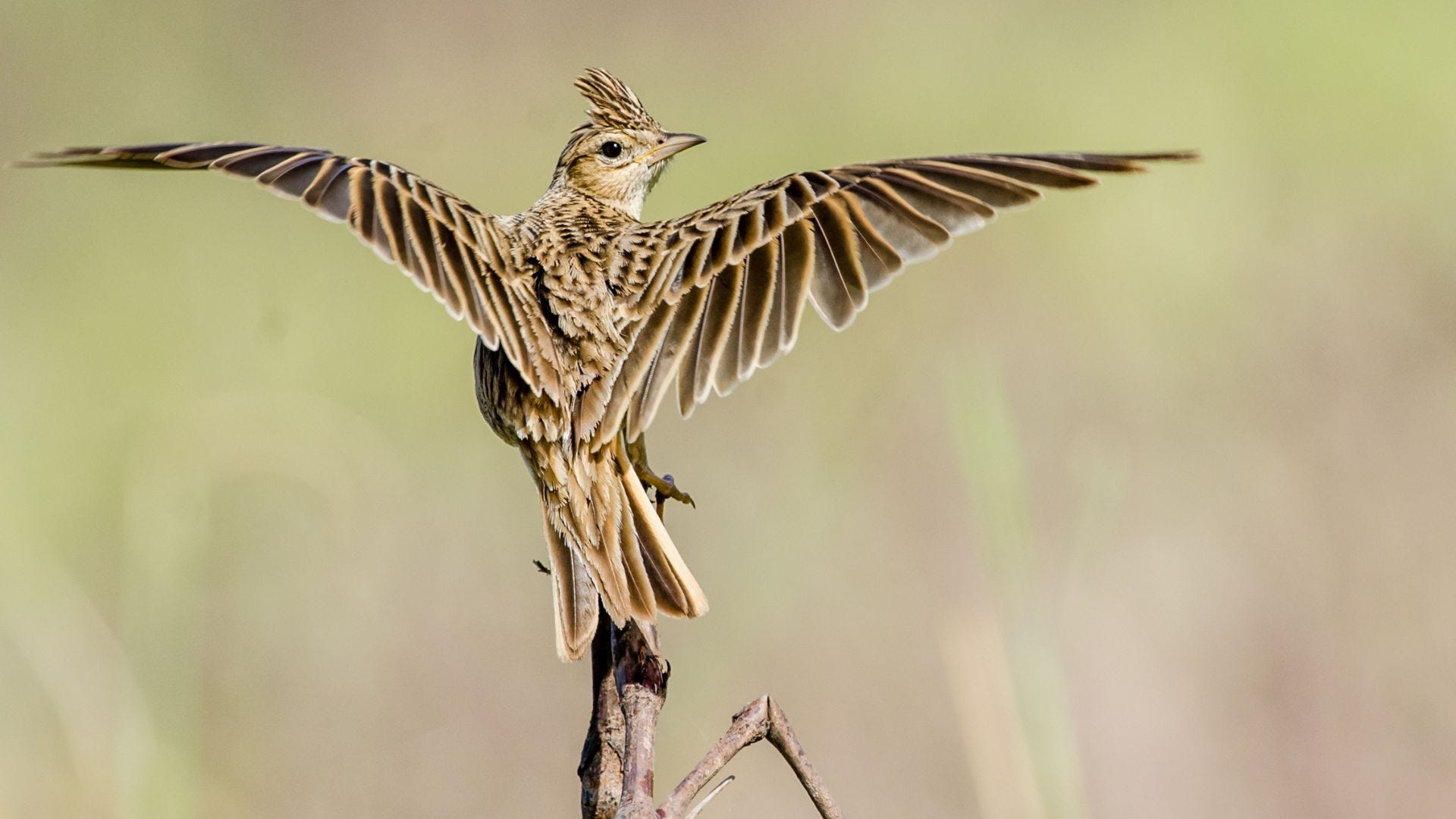
I’ve been thinking a lot lately about skylarks.
This time of year they rise almost invisibly from the fields, climbing higher and higher until they disappear entirely into brightness. You hear them long before you can see them. Song before body. Presence before proof.
I wonder sometimes how many people around us are living like that. Present, but partially hidden. Singing carefully above the noise. Waiting for signs that it is safe to land.
I think often about how many people grow up loving nature while feeling they do not fully belong within the culture surrounding it. As though the countryside, and conservation too, belongs only to certain kinds of people and not others.
But queer people have always been here. In villages and farming communities and field centres and ranger teams. In bird hides and botanical surveys and conservation offices. Restoring rivers. Counting bats. Monitoring dormice. Falling in love under enormous skies.
I suppose that is what I wanted this Pride march to be. For it to become a signal fire in the landscape. To say, I’m here. We’re here. You are welcome here too.
This is why visibility matters so much.
Visibility creates possibility. It widens the path a little for the people coming behind. The people before us understood that too, even back at Stonewall, standing together in the face of a world that demanded silence from them.
I am learning that culture change is slower and stranger than we want it to be.
It does not arrive all at once with applause and certainty. It begins awkwardly instead. With one person speaking first in a meeting. With someone quietly deciding not to laugh along with an uncomfortable joke. With a colleague mentioning their wife for the first time and nobody flinching. With an email sent out into the world not entirely sure what will come back.
With a few people signing up for Pride.
Nature teaches us this constantly, after all.
Woodland does not appear overnight. Chalk grassland is built from centuries of disturbance and return. Rivers carve valleys through persistence rather than force.
Belonging, I suspect, works much the same way.
Slowly, incrementally and through repeated acts of visibility and welcome.
This August, a small group of us will walk through Swindon together beneath rainbow flags and hopefully decent weather. Perhaps more people will join by then. Perhaps they won’t. Either way, we will still walk.
And somewhere, maybe, someone will see us.
A young volunteer wondering whether they fit in this sector. A queer teenager who loves birds. A member of staff who has never said certain things aloud. Someone standing at the edge of themselves waiting for a sign that it is safe to land.
Maybe a handful of people can be that sign.
After all, skylarks begin almost invisibly too.
A flicker in the grass. A small upward movement. Song carried on the wind long before anyone spots the bird itself.
But, if you stand still long enough and listen carefully enough, you see the whole sky is full of them.
This is lovely and poignant too. It may not mean that much, but I see you and hear you too, and if I lived near to you would be excited and honoured to walk with you at Pride. Sending love one human to another 💚
I love the idea of Wild Pride. I never got the chance to experience one of those in the UK.
Thanks for the honest explanations and speaking up for the community, Carrie. I loved the emblem of the lark- sometimes we need the confidence to fly up out of the long grass, to sing with our true voices.