
Beavers are back!
What we lost and what it means to welcome them home again

If you follow a river far enough upstream in England, perhaps near Wiltshire where I’m based, you might hear a soft whump-whump and catch a glimpse of a broad tail flicking beneath rippling water.
More likely, if you know what to look for, you’ll see it written into the landscape instead: a tree bent at an odd angle, bark peeled and gnawed, a neat pencil-point of wood where no storm passed through.
Beavers (Castor fiber Eurasian Beavers), extinct here for centuries, are returning to British rivers and beginning to reshape the land.
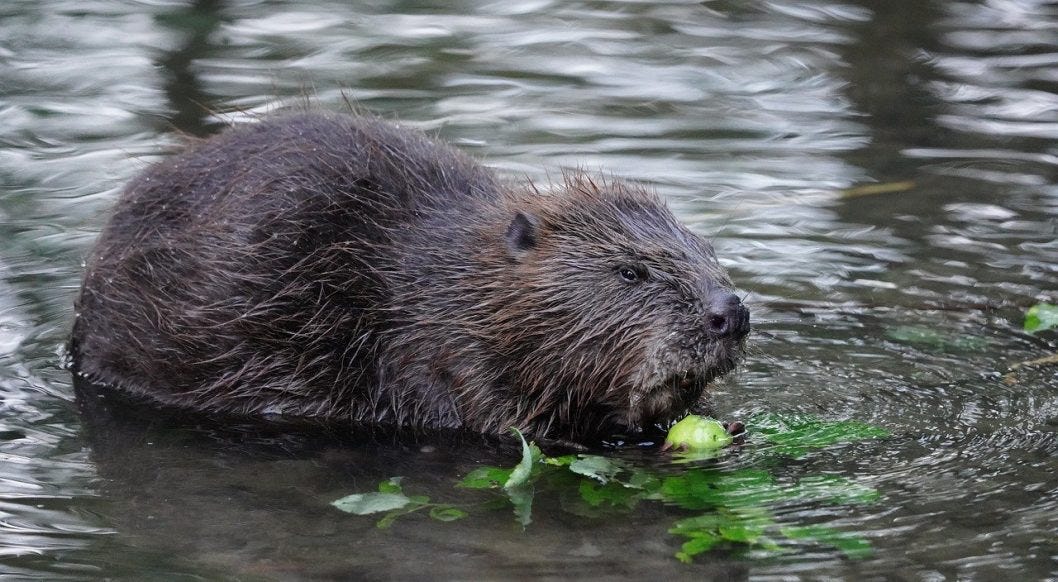
Once There Were Beavers Everywhere
Beavers were once widespread across Britain. Fossil and historical records show they lived in Wales in the 1100s, in England in the 1300s, and hung on in Scotland into the 1500s.
By the 16th century they were gone. Hunted to extinction for their fur, meat, and castoreum.
Castoreum is a strong-smelling, oily secretion produced by beavers from glands near the base of their tail. Beavers use it to scent-mark their territory, mixing it with mud and placing it on little scent mounds along riverbanks. To another beaver, it’s essentially a very clear notice that says: occupied.
To humans, however, castoreum became valuable.
For centuries it was prized in medicine, where it was believed to treat everything from headaches and fevers to hysteria and epilepsy, which tells you as much about historical medicine as it does about beavers.
It was also used in perfumery, valued for its musky, leathery scent and, crucially, its ability to “fix” fragrances helping perfumes last longer on the skin. In small amounts, it added depth and warmth.
The problem was how you got it.
Harvesting castoreum required killing the beaver. Combined with the demand for beaver fur (dense, waterproof, perfect for hats) and meat, this made beavers exceptionally vulnerable.
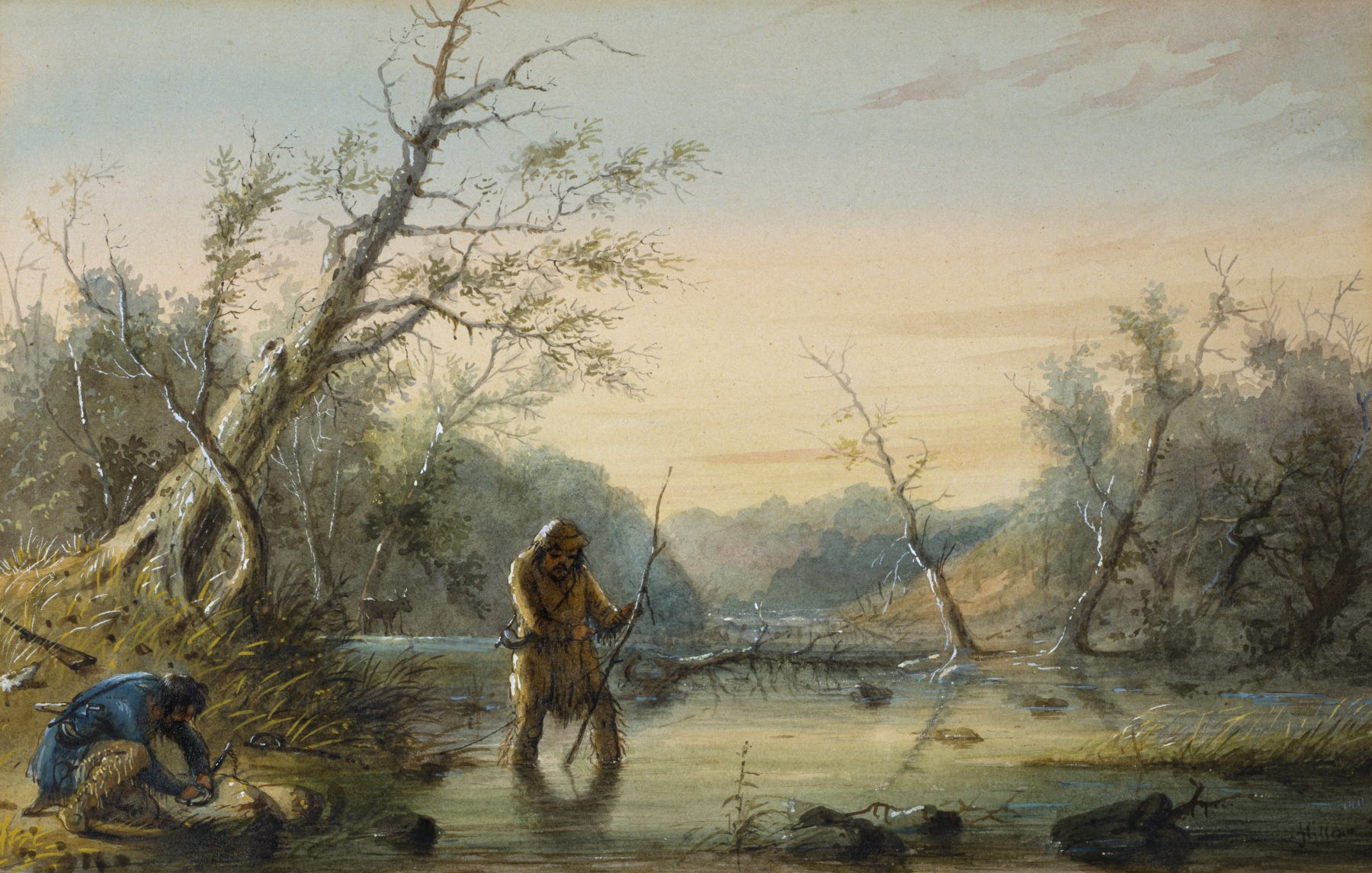
By the time fashions, medicines, and ingredients changed, it was already too late. The beavers were gone, and with them, the landscapes they created and maintained.
Across Europe, beavers didn’t fare much better. By the early 20th century roughly 1,200 individuals remained in a handful of populations from France to Mongolia.
In their absence, rivers that had once been lively mosaics of wetlands, pools, reeds, and rushing shallows, had now become dull corridors that were efficient, engineered and ecologically barren.
Why Beavers Matter and What They Do
Beavers are often described as ecosystem engineers. It’s an accurate phrase, if a slightly dry one.
When a beaver fells a tree, builds a dam, or burrows into a bank, water begins to behave differently. It slows and spreads. Ponded water fans out across the floodplain, storing itself in the land and releasing gently downstream, easing droughts and sudden floods.

Beaver dams trap sediment and pollutants, cleaning water as effectively as many human-made systems, and often more cheaply.
Then comes the explosion of life.
Slower water and wetland edges create homes for dragonflies and amphibians, fish and wetland birds, bats skimming the surface at dusk. Across Europe, researchers consistently find more species in waters shaped by beavers.
This was what rivers would have felt like before industrialisation. A tangle of shallows and channels, flooded glades and wet meadows. A place where otters slid, water voles burrowed, herons stalked, and everything lived in the untidy space between land and water.
We have only rare pockets of that world now. Just enough to remind us of what’s missing.
The Long Way Back: Europe First, Then Home
Europe’s beaver story is one of remarkable recovery.
After near-extinction, decades of protection and reintroduction saw populations rebound to over 1.5 million animals by 2020. Beavers now range from France through Scandinavia and into Russia, reshaping rivers as they go.
The story in Britain is slightly different.
Until very recently, beavers in Britain were extinct. It wasn’t until the early 2000s that conservation groups and Wildlife Trusts carefully began managed reintroduction trials.
The first was Scotland’s pilot at Knapdale (2009–2014), which demonstrated what many ecologists already suspected: beavers could thrive here, and rivers would be better for it.
Scotland now has over 2000 beavers and have European Protected Species status.
In England, things moved more slowly.
At places like Knepp Estate, beavers were introduced inside fenced or bounded areas. Their impacts were studied, celebrated, and widely influential but legally, they did not represent a return of beavers as a free-living native species.


Those projects mattered enormously. They built evidence, confidence, and public support. But they weren’t the same thing, in policy terms, as letting wild beavers recolonise entire river catchments.
That changed in February 2025, when the Government finally announced that beavers would be allowed to live wild in English rivers once again, under licence and within a long-term management framework.
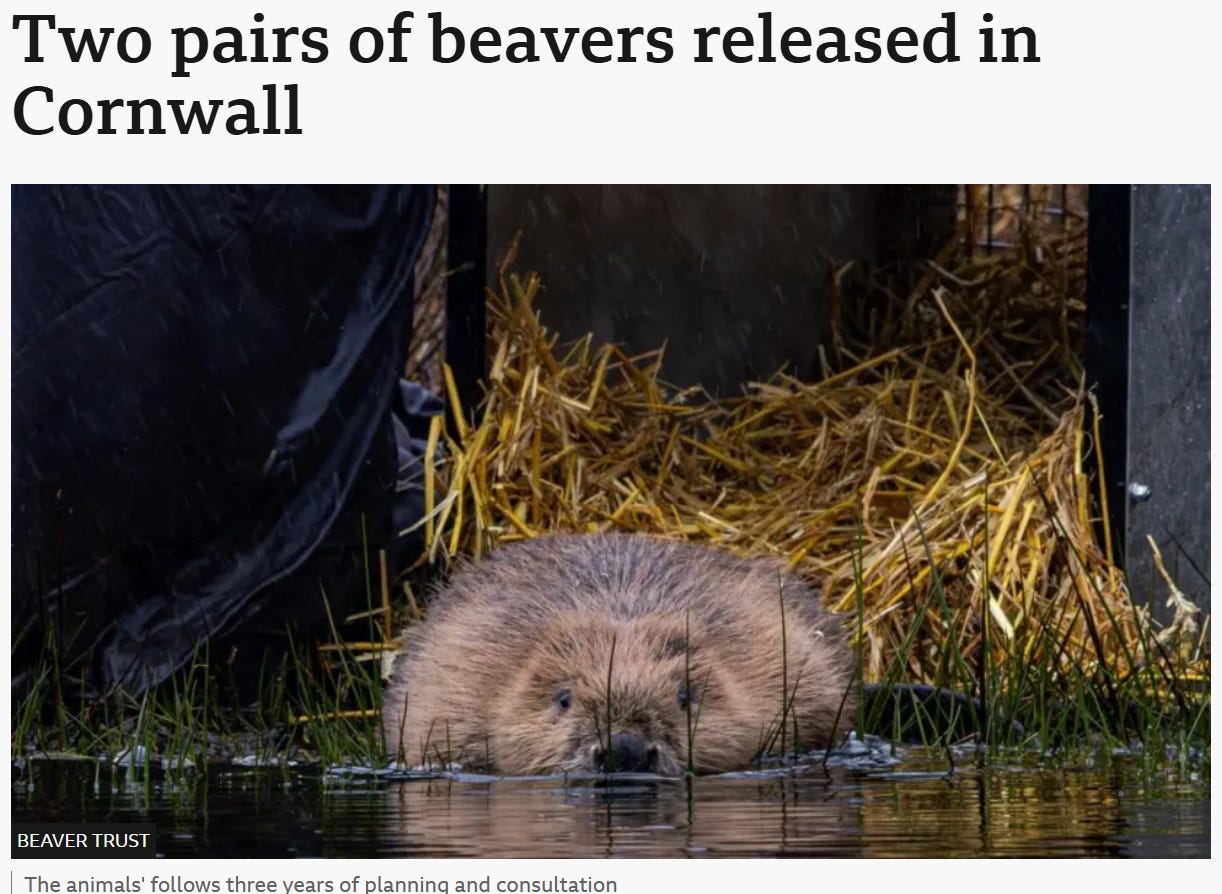
A month later, the first official wild releases took place on Purbeck Heath in Dorset. Then, only last week, Cornwall Wildlife Trust released two pairs of beavers into a Cornish nature reserve, marking the county’s first fully licensed return of this long-lost native to the wild.
Meanwhile, thanks to a mix of official projects and unauthorised releases, small wild populations have also established in Devon, Somerset, Kent, Surrey, West Sussex and yes, Wiltshire too.
Here in Wiltshire, beavers have naturally travelled into several river systems. They’re doing what they do best: felling trees, building dams, and spreading wetland habitat.
A canoeist once reported a tree gnawed through on one of our reserves, hanging precariously over the water. By the time we arrived to investigate, the log had already floated downstream, harmless and already part of the river’s reshaping.
It’s an elegant little story of beaver work: modest, practical, and meaningful but also a glimpse of what lies ahead.
Living with Beavers: Challenges and Coexistence
Right now, the UK’s beaver population is still small compared to its long-term potential, and the serious challenges haven’t landed yet.
But they will.
There’s a good chance that as beaver populations grow conflicts will happen. Perhaps there will be trees felled in awkward places, dams raising water onto farmland, or burrows undermining banks.
This is where Europe’s longer experience will be helpful.
In Switzerland, where beavers were reintroduced in the 1950s, populations now occupy most major rivers across the plateau and Alps.
With this success came friction.
Gnawed trees, flooded fields, infrastructure concerns and the realisation that coexistence requires active management, not just blind optimism.
The Swiss response has been thoughtful rather than reactionary. In Zurich, a beaver hotline connects residents with ecologists who advise on fencing, flow devices, and practical solutions before frustration turns to hostility. Elsewhere, compensation schemes and targeted interventions help balance human needs with ecological gains.
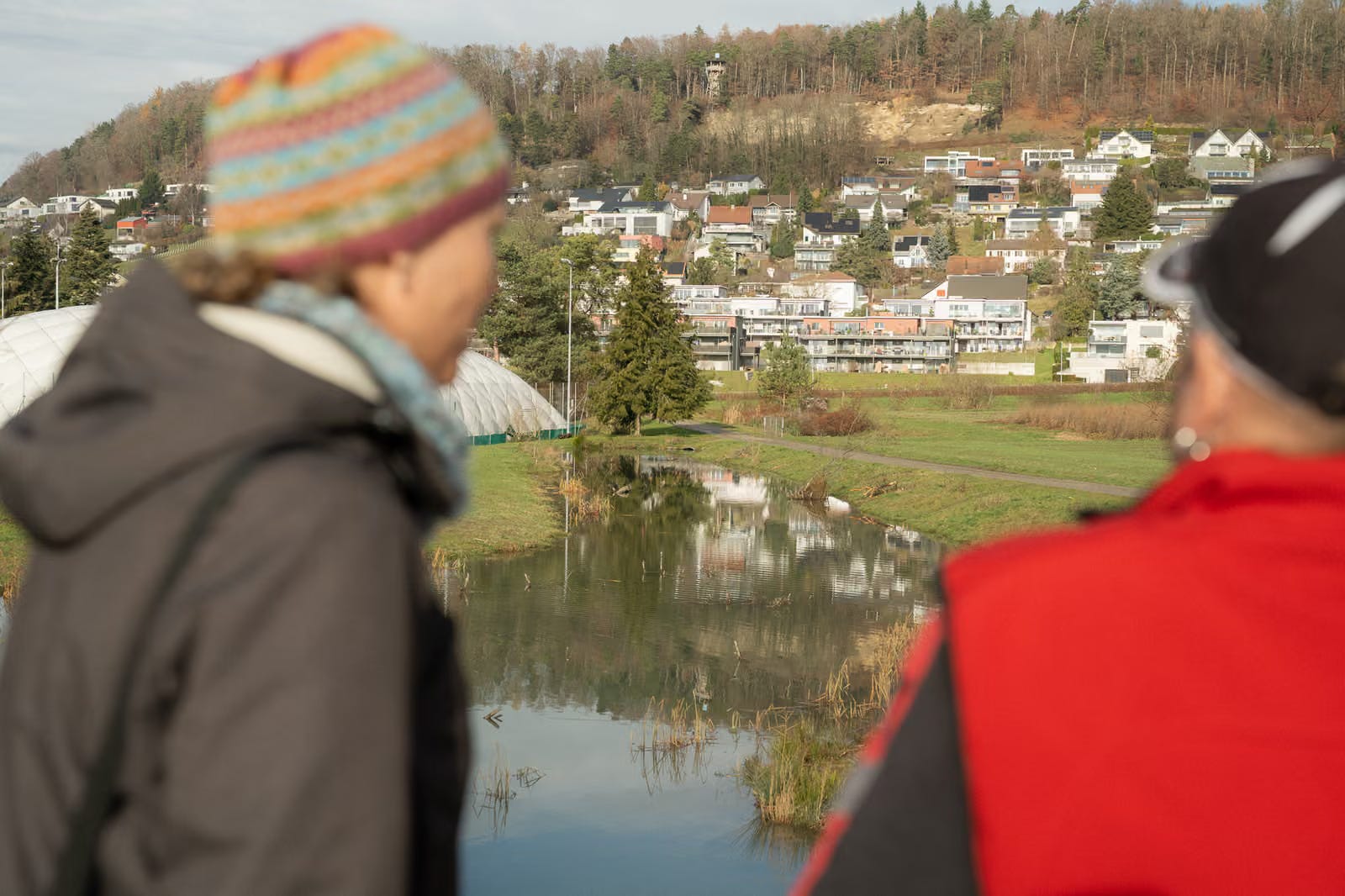
Their experience of a blended model of coexistence and active management, is becoming something of a template for Europe.
It’s not hands-off rewilding, it’s relationship-building, which I love.
Some countries permit controlled culling as a last resort; others prioritise prevention and adaptation.
I find it hard to imagine culling here. I hope, very much, we find other ways.
What I’d love is to start the work of education and engagement now while beavers are still new and curious, before misunderstandings harden into conflict. This is the moment when listening matters most.
We tried to build that into our plans. We wanted a dedicated beaver officer as part of our Species Recovery funding bid, someone whose job would be to talk, explain, reassure, and get ahead of the problems rather than chase them. Who would get children down to the riverbank, muddy-booted and wide-eyed, learning to spot gnawed willow. If kids grow up knowing beavers not as problems, but as neighbours, they’re far more likely to want to protect them.
Love, as it turns out, is a powerful conservation tool.
Alas, we were not successful with that funding bid.
So for now, our hands are tied. There’s no funding to do the work that would make coexistence easier, calmer, and kinder. And I can’t shake the feeling that, without it, we’re watching a slow train collision not because beavers are the problem, but because we didn’t invest early enough in helping people live alongside them.
What Rivers Are For
In the end, the beaver’s return invites us to rethink what are rivers for?
They aren’t just drains for stormwater. They’re living networks, historically shaped by creatures like beavers for flooding, stagnating, expanding and contracting, creating a rich tapestry of life at every edge.
Welcoming beavers back is a bit like inviting an old friend home after generations apart. There’s joy in their presence, and, if we’re honest, a little learning to do too.
What a gift it is to see them gnaw again.
To hear the soft slap of a tail at dusk.
To watch a landscape remember what it once was.
What a gift.
I live very close to a beaver location in Somerset. It's magical. It's also evident not everyone feels that way, which worries me deeply.
Beavers in Berkshire now too! River Kennet. Such a thoughtful, balanced and hopeful piece. Hope that funding comes.